Cats Don’t Meow at Each Other — They Developed It Specifically for You
FurePET is the pet health app that helps you track your cat’s behavior patterns, symptoms, and health changes — all in one place. We’re launching soon. Join the waitlist at furepet.com.
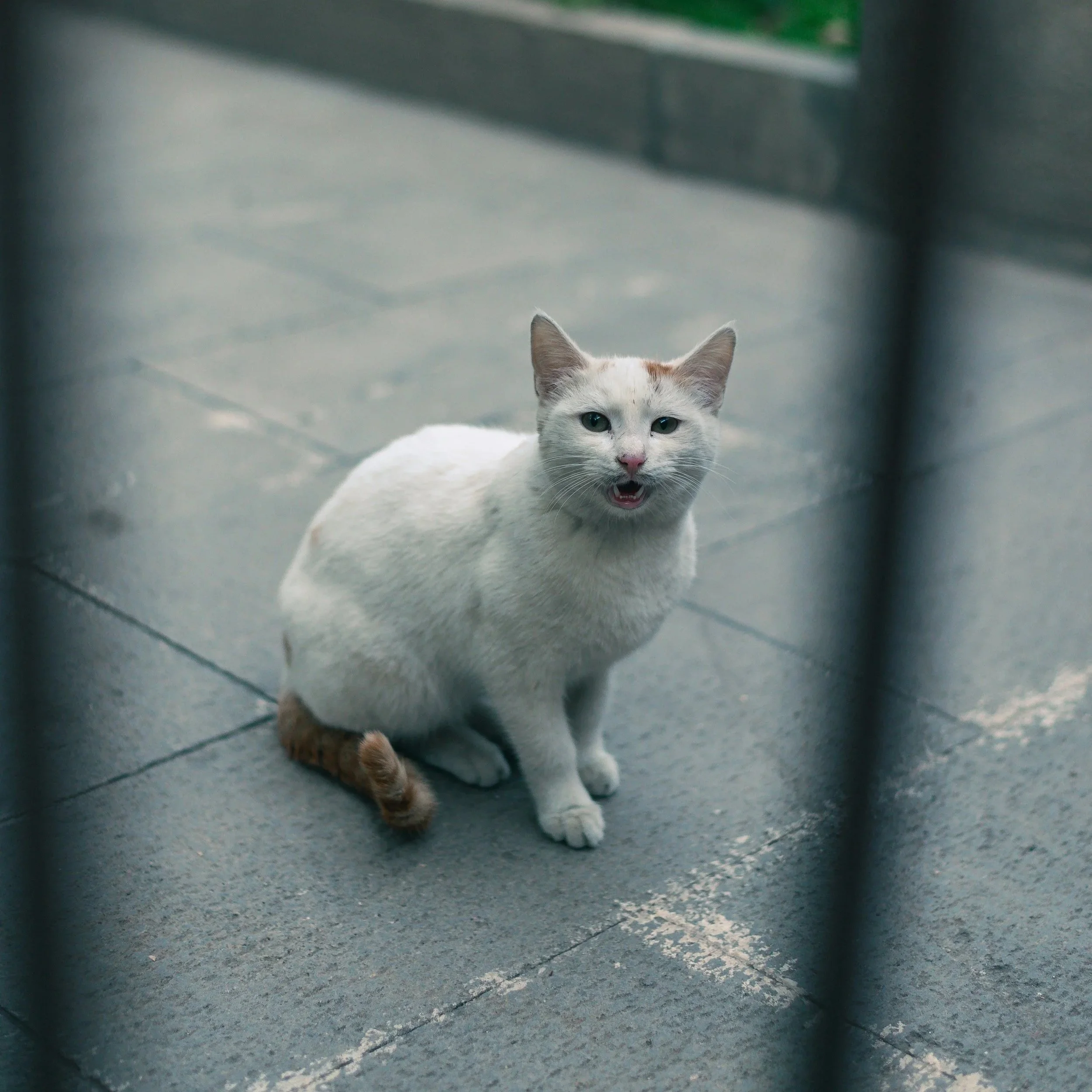
If you live with a cat, you hear it every day. The short chirp when you walk into the room. The long, drawn-out yowl when dinner is three minutes late. The soft trill when they greet you at the door. Meowing is such a constant part of cat ownership that most people never stop to ask a fundamental question: why do cats meow at all?
The answer is one of the most fascinating things in domestic animal behavior: adult cats almost never meow at each other. The meow, as you know it, is a behavior that exists almost exclusively for you. Your cat developed it — over thousands of years of domestication — as a tool for communicating with humans. And the specific way your cat meows at you is unlike the way any other cat on earth meows at their owner.
Kittens Meow. Adult Cats Don’t. Unless There’s a Human.
In the wild and in feral cat colonies, kittens meow frequently. It’s their primary way of communicating with their mother — signaling hunger, distress, cold, or the need for attention. The mother responds to these vocalizations, and the system works.
But here’s what’s striking: as kittens mature into adult cats, they stop meowing at each other almost entirely. Adult feral cats communicate through body language, scent marking, hissing, growling, and yowling during mating or territorial disputes. But the standard meow — the one your cat uses daily — essentially disappears from their vocabulary when interacting with other cats.
The exception? Domestic cats living with humans. Adult domestic cats retain and actually expand their meowing behavior throughout their entire lives. They don’t do this with other cats in the household. They do it with you. Behaviorists describe this as a form of neoteny — the retention of juvenile behaviors into adulthood — that has been selectively reinforced over thousands of years because it works. You respond to meowing. So your cat keeps doing it.
Your Cat Invented a Language for You
What makes this even more remarkable is that the meowing your cat does isn’t generic. Research from Cornell University and Lund University in Sweden has demonstrated that cats develop individualized vocal patterns that are tailored to their specific owner’s responsiveness.
In other words, your cat has learned which sounds get you to do what. A short, high-pitched meow might mean “feed me” in your household but mean something completely different in another cat’s home. Your cat has, through trial and error over the course of your relationship, crafted a personalized set of vocalizations designed to communicate with you and you specifically.
A study published in the journal Animal Cognition found that cat owners could correctly identify the context of their own cat’s meows — distinguishing between food requests, greetings, and distress calls — with significantly higher accuracy than they could interpret meows from unfamiliar cats. The communication system your cat has built isn’t just species-specific. It’s relationship-specific.
This means that your cat’s meow vocabulary is, in a very real sense, a private language between the two of you. No other cat speaks it. No other human fully understands it. It was developed by your cat, for you, based on years of subtle feedback loops.
The Different Types of Meows and What They Mean
While every cat’s vocal repertoire is unique, researchers have identified several broad categories of meows that appear across domestic cats.
The short meow or chirp is typically a greeting. It’s the sound your cat makes when you walk into a room or come home. It’s brief, relatively high-pitched, and carries a friendly, acknowledging tone. Think of it as your cat saying “hey, you’re here.”
The mid-length meow is usually a standard request. Food, water, a door opened, attention. This is the workhorse of cat-human communication. It’s moderate in pitch and volume and is designed to get a specific response.
The long, drawn-out meow or yowl is an escalation. Your cat has asked for something and you haven’t responded. This is the “I said what I said and I’m not asking again nicely” vocalization. It’s louder, lower in pitch, and more insistent.
The silent meow — where your cat opens their mouth but no sound comes out — may actually contain sound that’s above the range of human hearing. Cats can vocalize at frequencies up to 79,000 Hz, while humans max out at around 20,000 Hz. That silent meow might not be silent at all. It might just be silent to you.
The trill or chirrup is a rolling, musical sound that’s somewhere between a meow and a purr. It’s almost exclusively positive — a greeting, an expression of affection, or an invitation to follow. Mother cats trill at their kittens to get them to follow, and adult cats retain this sound for their favorite humans.
The Solicitation Purr: Your Cat’s Secret Weapon
Beyond meowing, researchers at the University of Sussex discovered something even more sophisticated: the solicitation purr. This is a purr that contains a high-frequency cry embedded within it, similar in frequency to a human infant’s cry.
Cats deploy this specific purr when they want something — usually food. The embedded cry triggers an innate caregiving response in humans. Study participants rated the solicitation purr as significantly more urgent and less pleasant than a normal purr, even when they couldn’t consciously identify what was different about it.
Your cat has essentially reverse-engineered your nurturing instincts. They’ve figured out that a sound resembling a baby’s cry, hidden inside the comforting sound of a purr, is almost impossible for you to ignore. And they use it strategically.
When Changes in Meowing Signal a Problem
Because your cat’s meowing patterns are so consistent and personalized, changes in those patterns can be an early indicator of a health issue. Most cat owners know their cat’s “normal” vocal behavior intuitively, even if they’ve never consciously catalogued it. When that baseline shifts, pay attention.
A sudden increase in vocalization — particularly in a cat that’s normally quiet — can signal pain, cognitive dysfunction in older cats, hyperthyroidism, high blood pressure, or anxiety. Cats in pain often become more vocal, not less, contrary to the common belief that cats hide all signs of illness silently.
A change in the sound of the meow itself — hoarseness, a raspy quality, loss of volume, or a higher pitch than usual — can indicate upper respiratory issues, laryngeal problems, or even a foreign body irritating the throat.
Excessive nighttime vocalization in older cats is one of the most common early signs of feline cognitive dysfunction syndrome, the cat equivalent of dementia. If your senior cat has started yowling at night for no apparent reason, a vet visit is warranted.
A normally vocal cat that suddenly goes quiet is also a red flag. Silence in a typically talkative cat can indicate illness, depression, or pain severe enough that the cat is conserving energy.
The key is knowing your cat’s baseline. What’s normal for them. How often they vocalize, what it sounds like, and when it happens. Changes from that baseline — not absolute volume or frequency — are what matter.
What This Says About the Human-Cat Bond
The fact that cats developed an entire vocal communication system exclusively for humans says something profound about the depth of the domestic cat-human relationship. Cats are often stereotyped as aloof, independent, and indifferent to their owners. The science of meowing tells a completely different story.
Your cat didn’t just tolerate living with you. Over thousands of years, cats actively evolved new behaviors to communicate with you more effectively. They studied you. They learned what sounds make you respond. They crafted a personalized language that only works with you.
That’s not indifference. That’s one of the most sophisticated interspecies communication adaptations in the animal kingdom. And it happened because cats wanted to talk to us.
So the next time your cat meows at you, remember: that sound doesn’t exist in nature. It was invented for you. By them. And the specific way they say it? That’s yours alone.
Keep Your Pet’s Health On Track with FurePET
FurePET is the digital health passport for modern pets — organizing your pet’s behavior patterns, health records, vet visits, and symptom tracking all in one place. When your cat’s meowing pattern changes, you’ll have the history to show your vet exactly when it started and what else was different.
We’re launching soon. Join the waitlist at furepet.com to be first in line.